CAA Mengyuan Campus
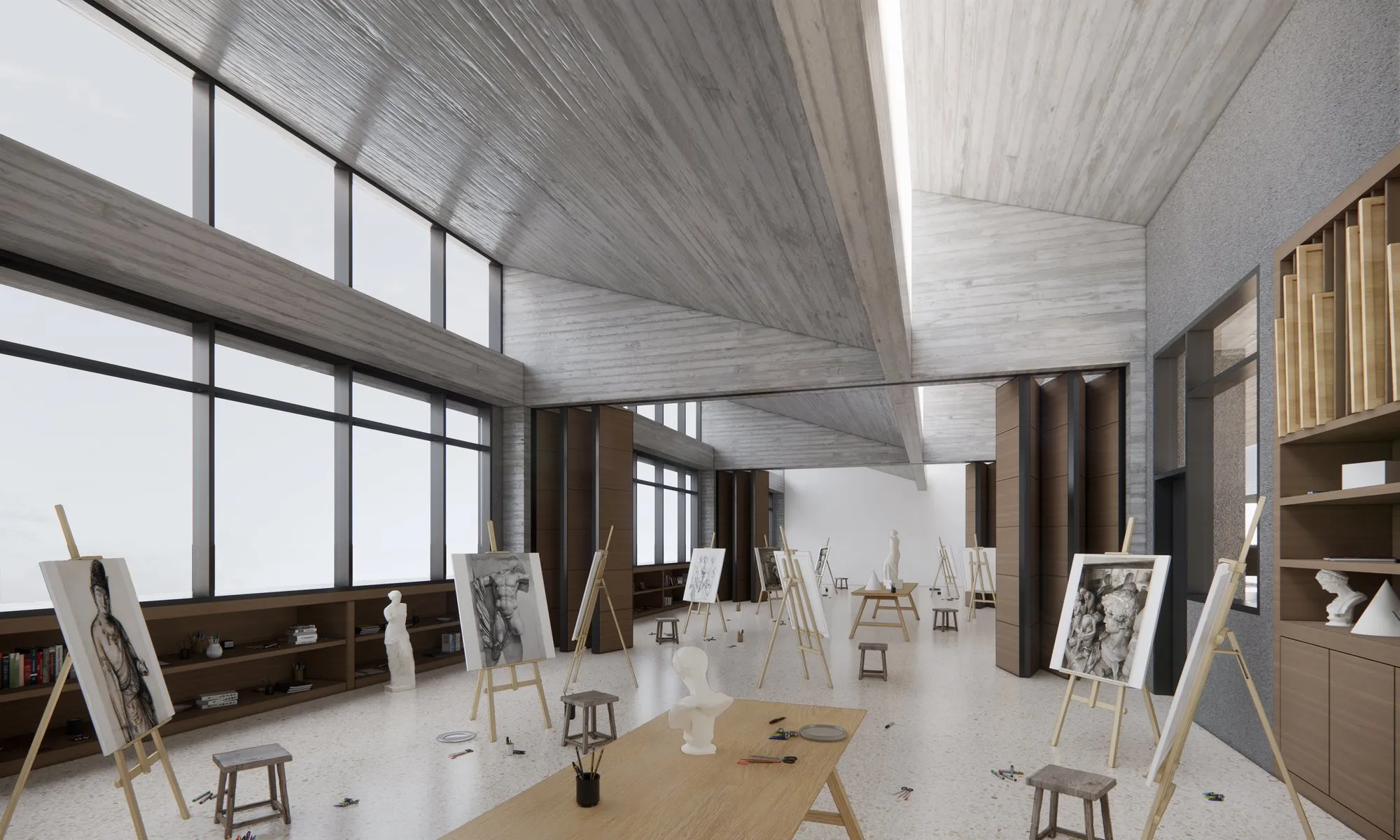
The China Academy of Art teaches both Western fine art and traditional Chinese art, and the proposal for its Mengyuan Campus starts from that dual commitment. The two traditions see the relationship between people and the world differently. Western art, built on linear perspective, set the observer apart from nature, and its training grew up in the studio, where still lifes are drawn under carefully controlled light. Traditional Chinese art treated people and nature as one. Its landscape scrolls use scattered perspectives, and much of its learning happened at informal gatherings outdoors, like the one recorded in the Lantingji Xu. The campus gives each tradition a layer of its own.
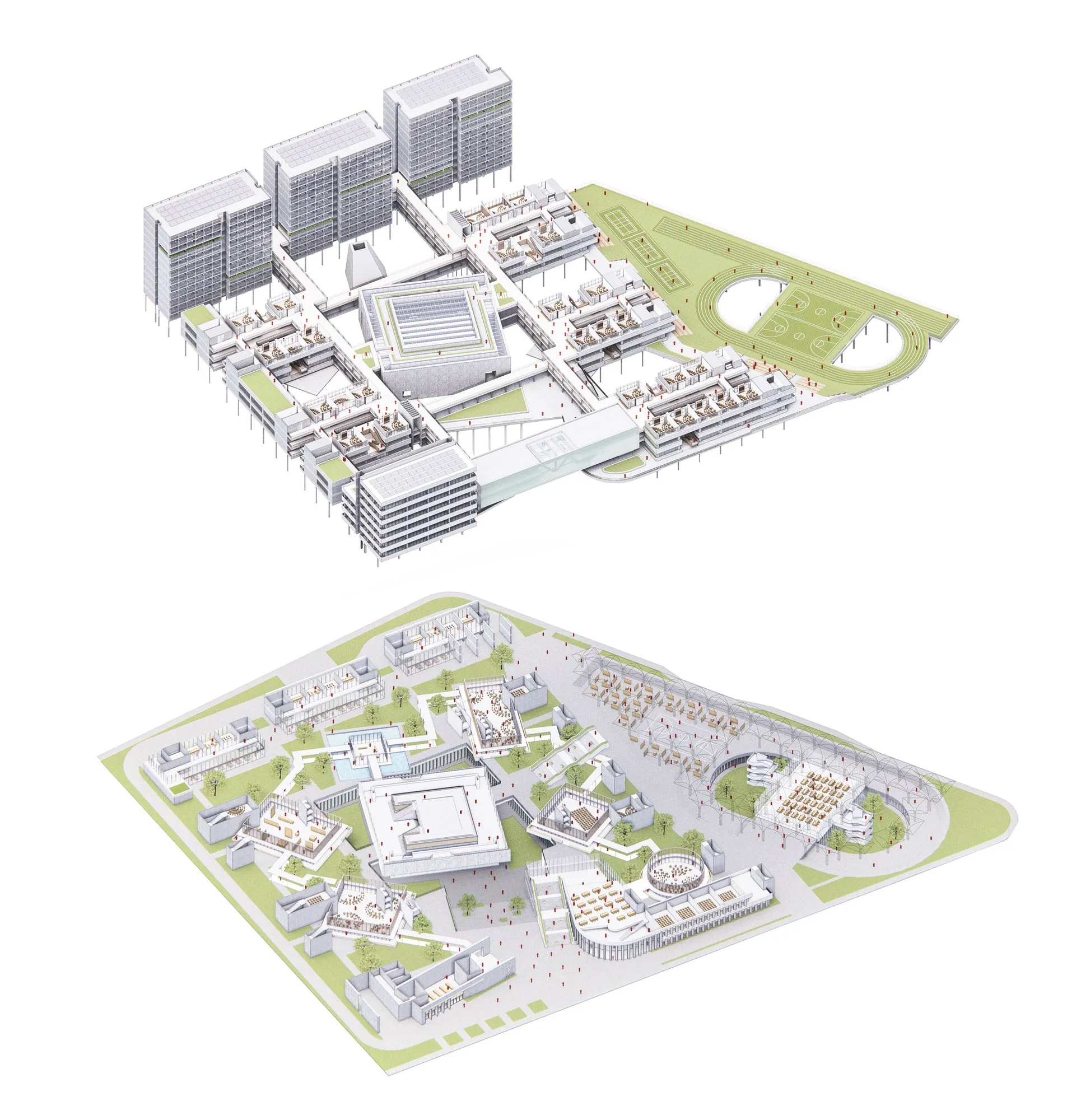
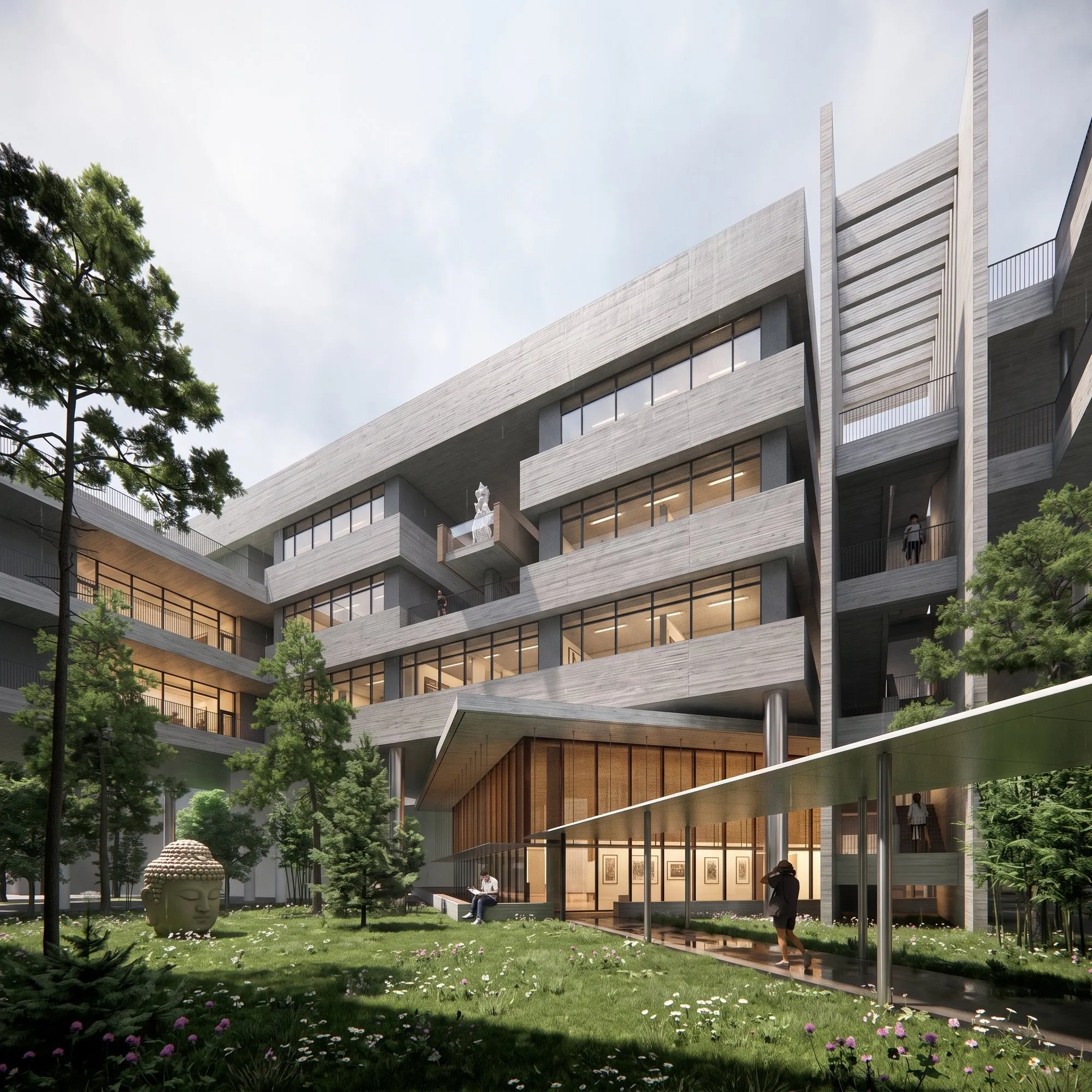
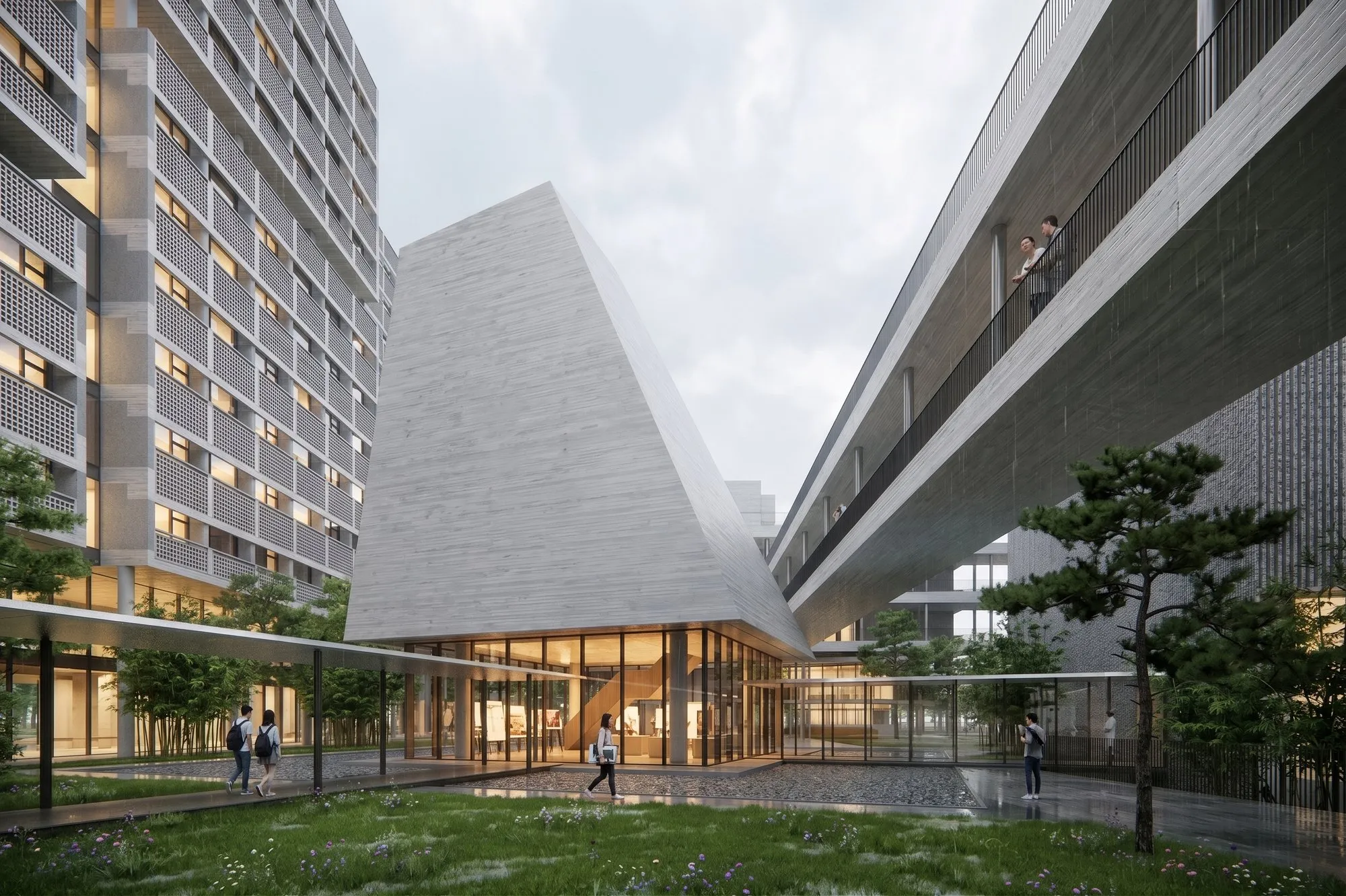
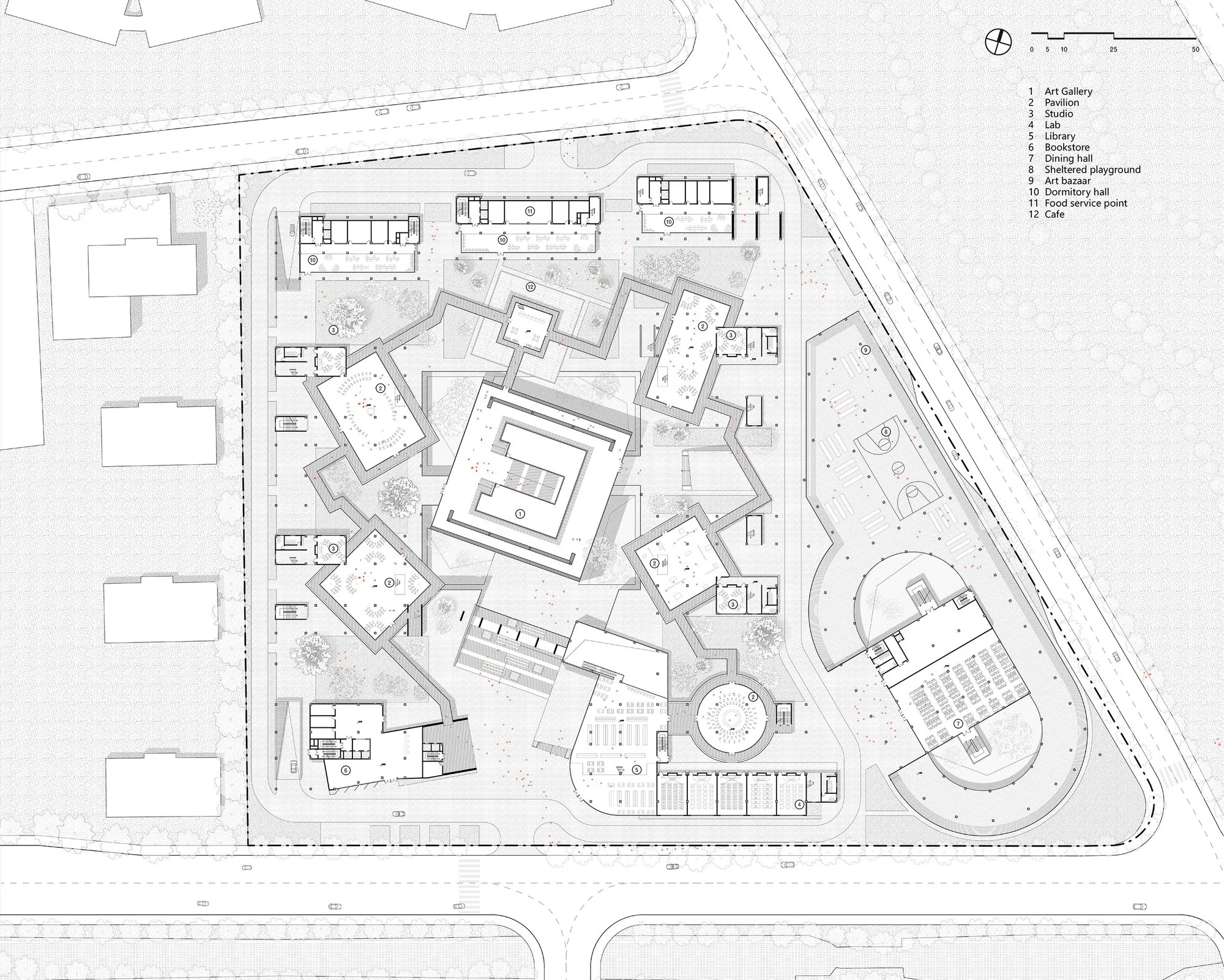
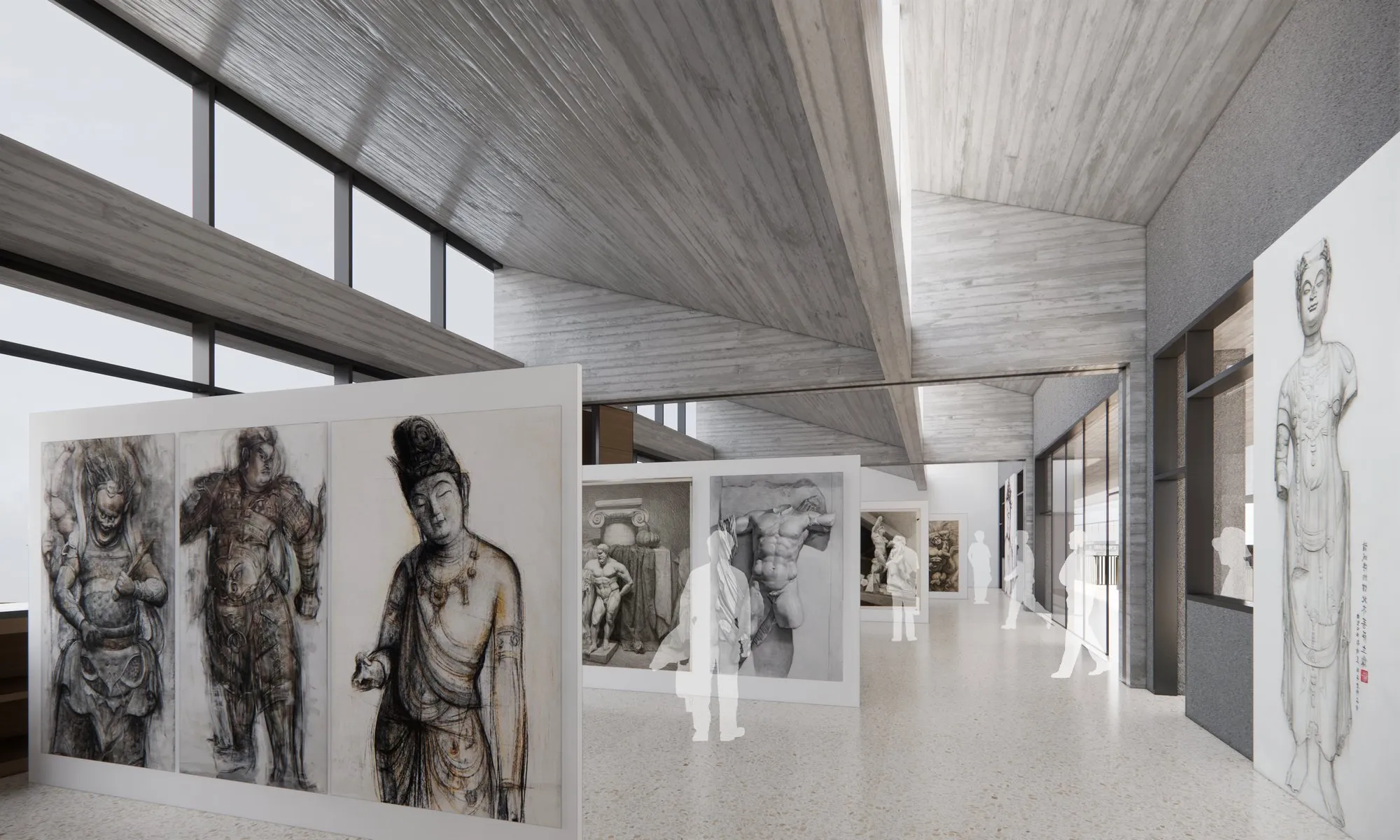
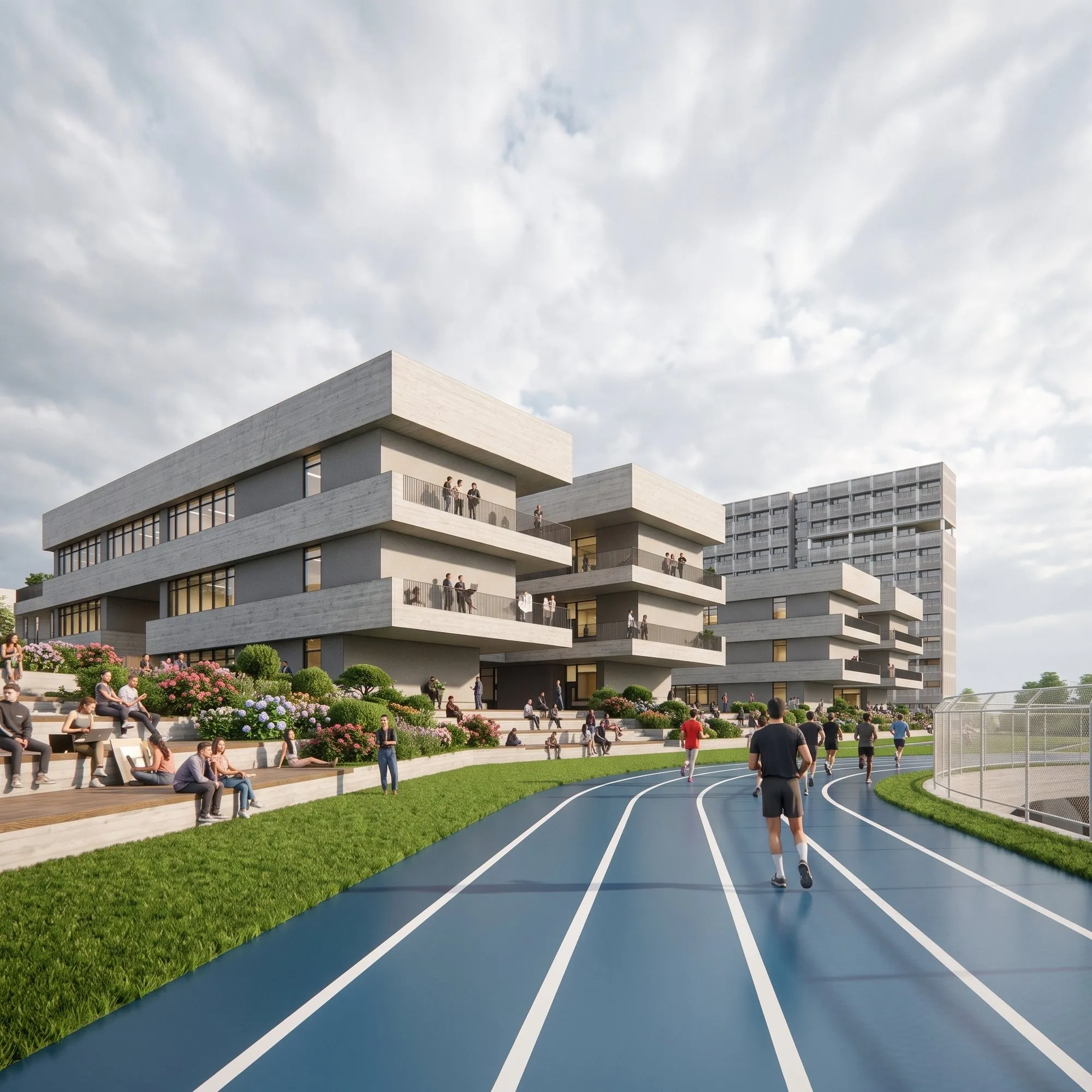
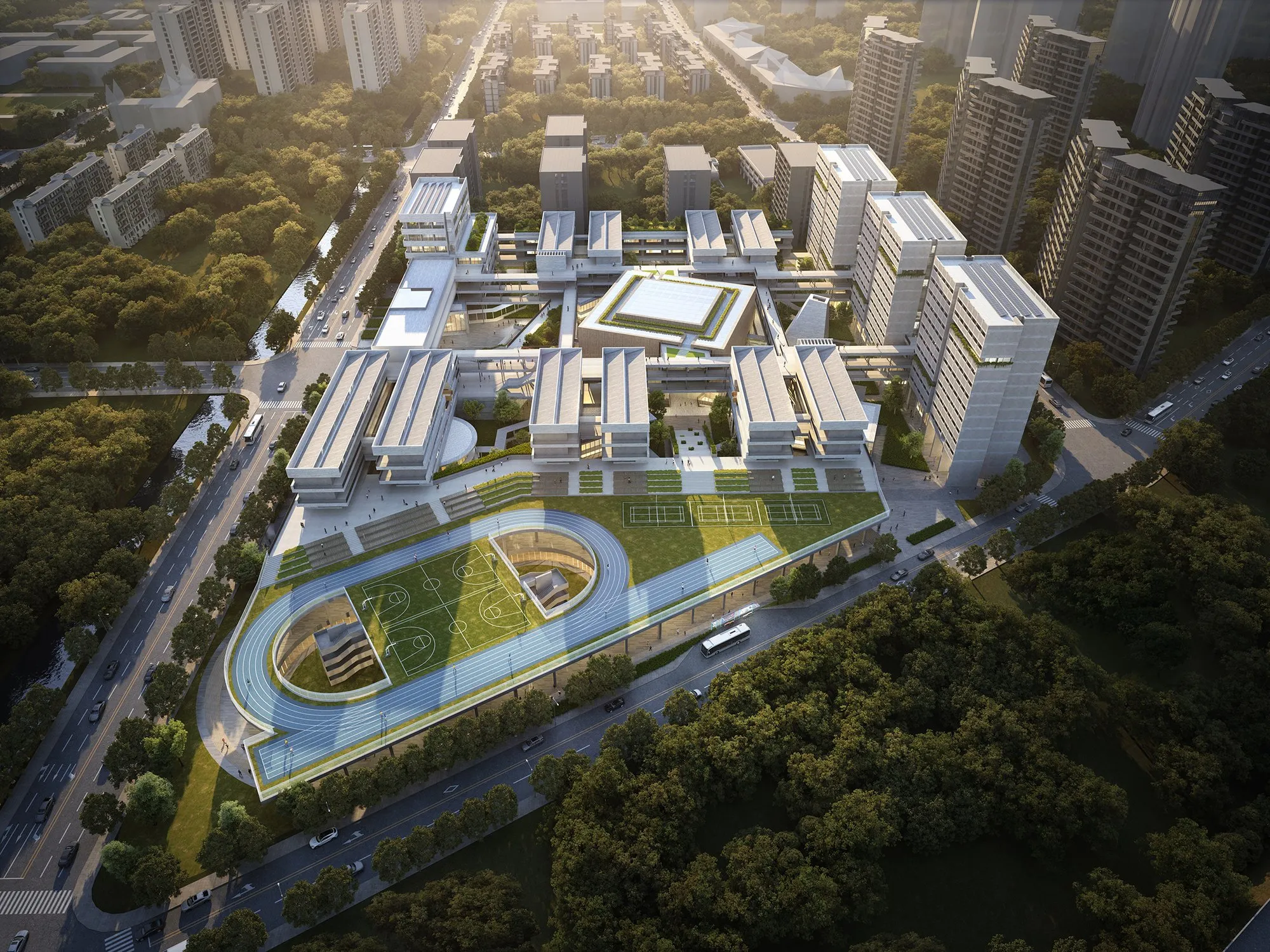
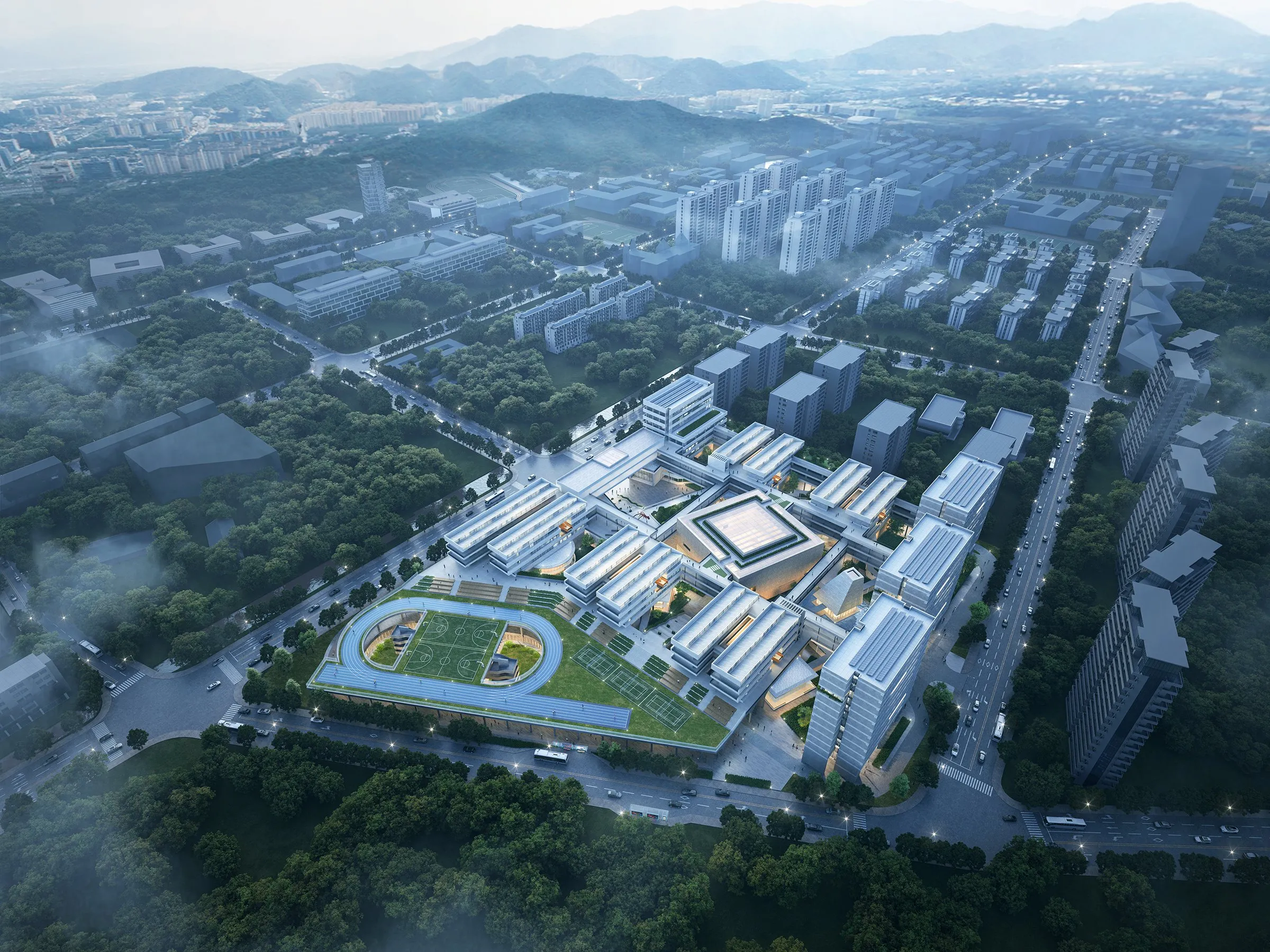
The upper levels hold gridded, skylit studios for professional fine art training. The ground floor is an open sculpture garden instead, with pavilions for amenities, exhibitions and other public functions spread freely across the site. Each pavilion meets a cluster of studios above it, and the stairs, passages and social spaces between them tie the levels together. Besides the formal galleries, informal pin-up and event spaces are scattered among the studios and classrooms, so that chance encounters between students can feed their work. The muted palette of Hangzhou, the spatial qualities of classical Chinese gardens, and Wang Shu’s Xiangshan Campus for the Academy all shaped the buildings’ forms and character.
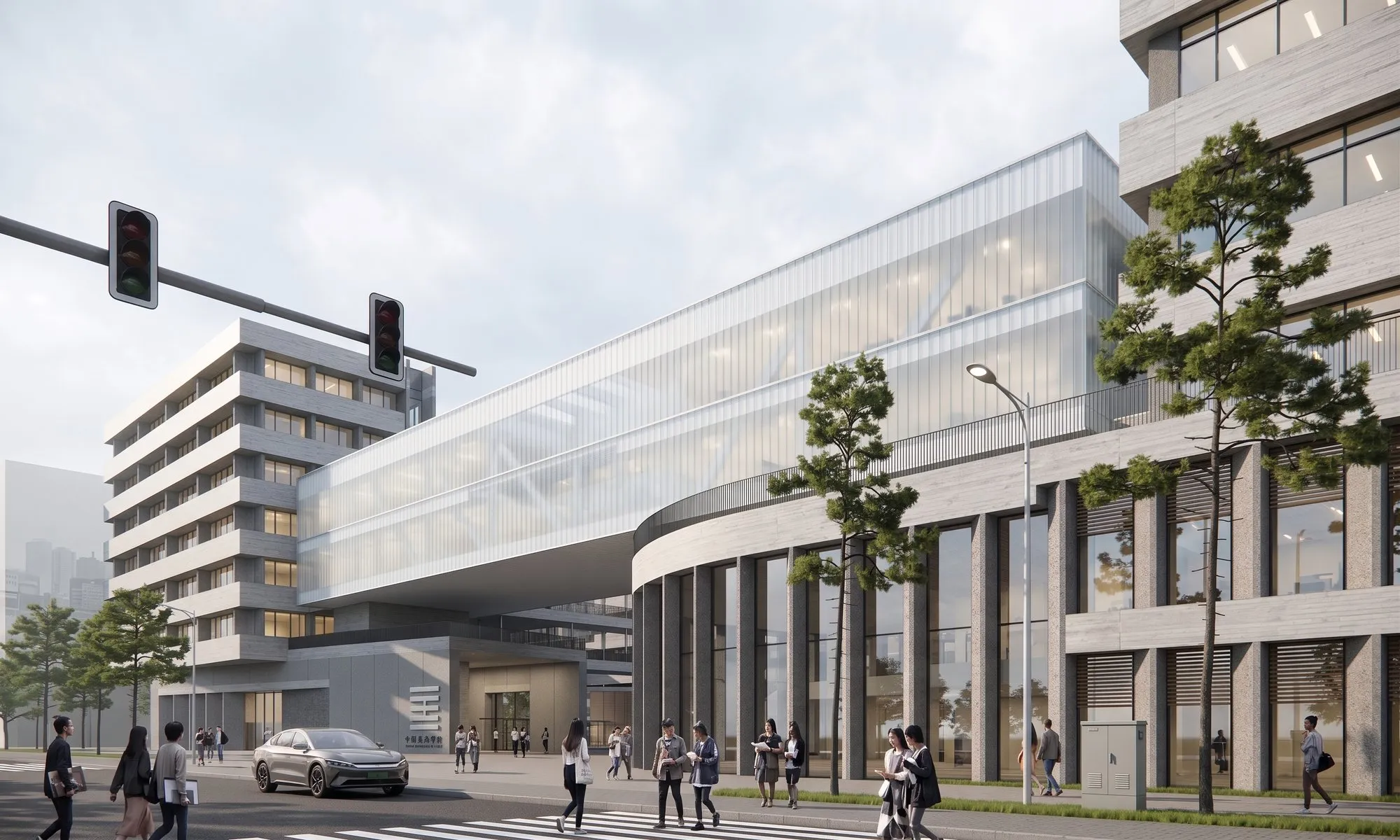
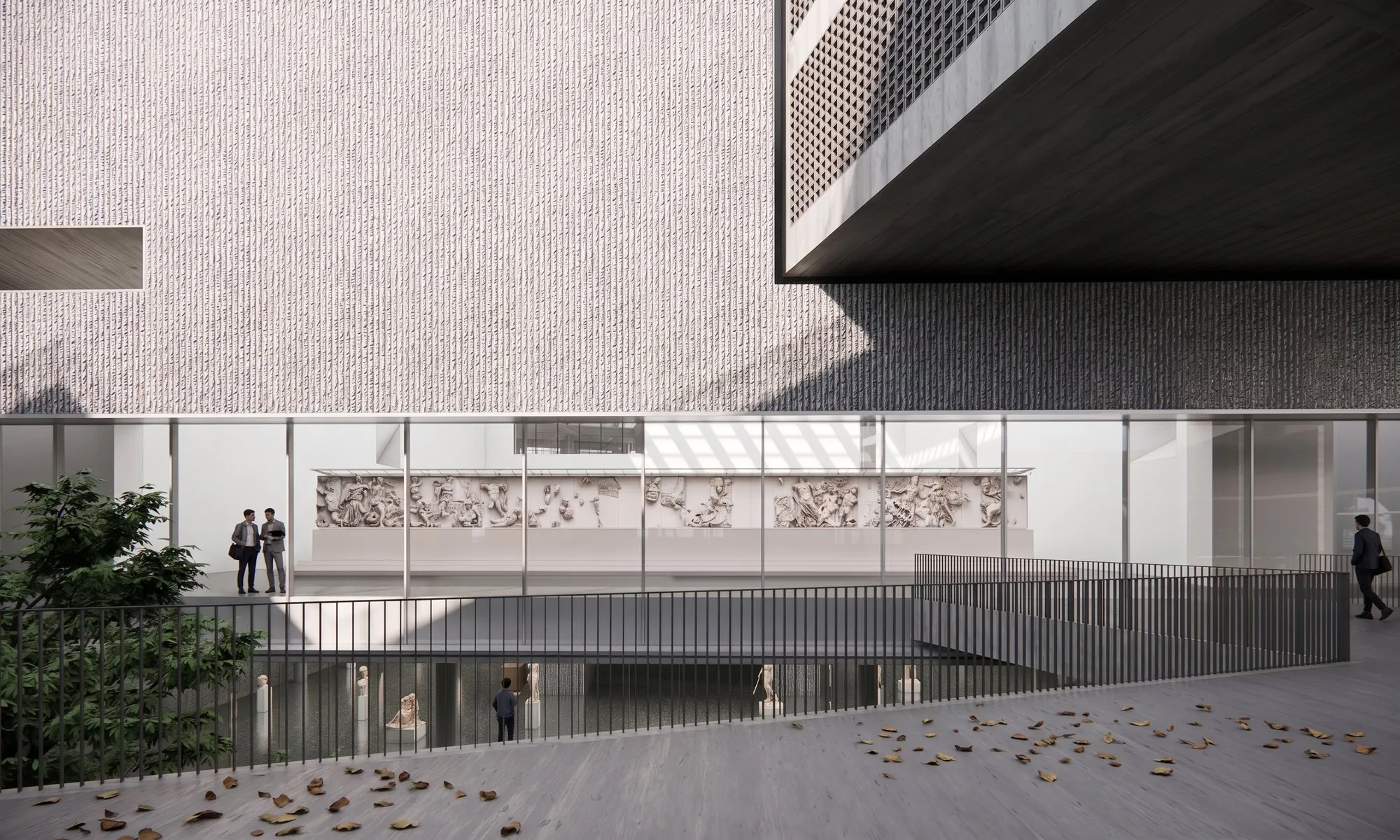
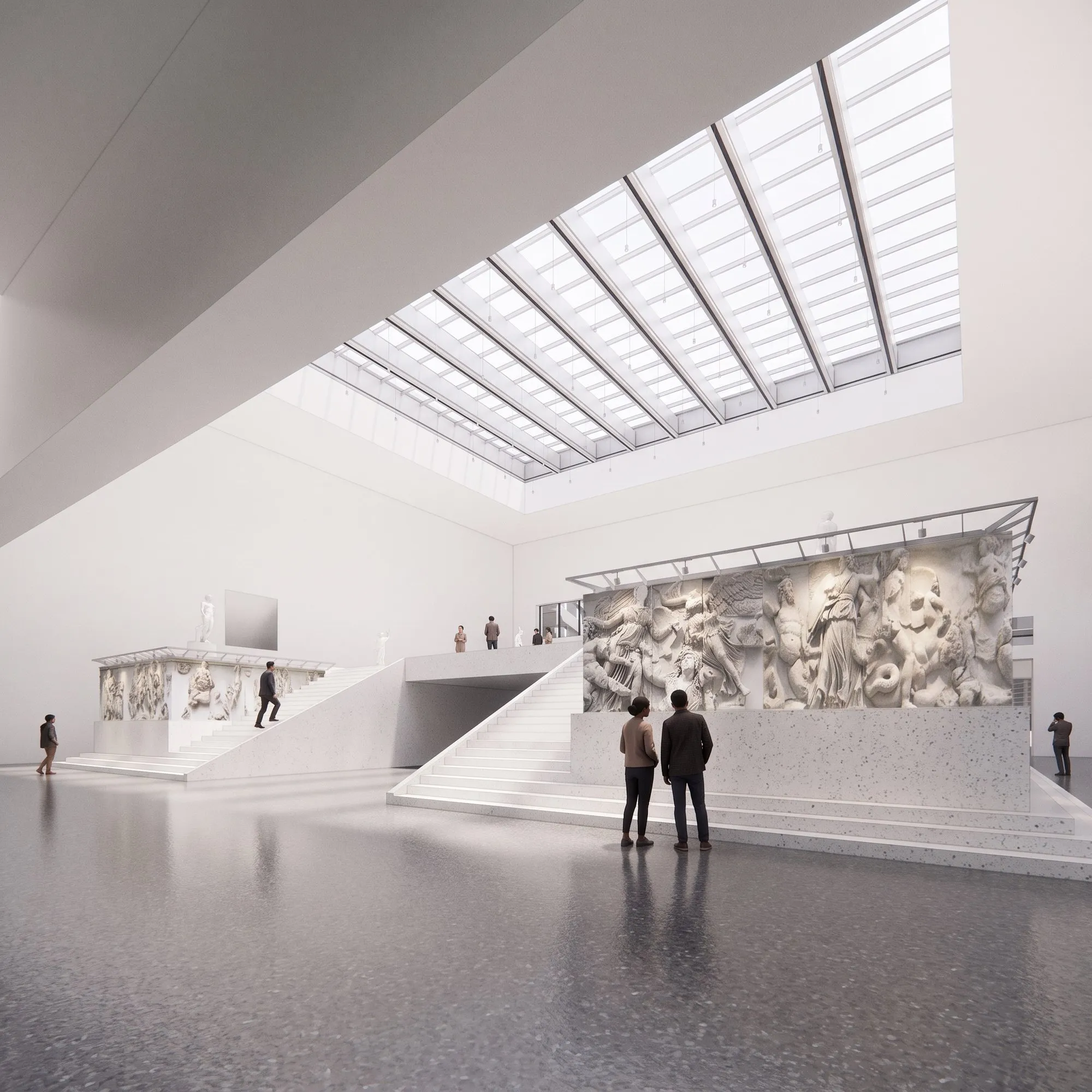
The Department of Fundamentals occupies the western half of the campus and the Affiliated High School the eastern half. The Art Gallery sits between them and houses the Academy’s plaster casts of the Pergamon Altar reliefs, a centerpiece of both its collection and its daily teaching. The gallery evokes the altar’s original setting with abstract massing and materials, recalling its history without copying it. Corridors and bridges link the studios, classrooms and the dormitories to the north into one walkable network. On the eastern edge, the high school’s playground is raised off the ground, and the sheltered space beneath it holds rentable studios and an art fair open to the surrounding neighborhoods.